Introduction
Marketing is the activity of promoting and selling products or services to people. It helps businesses reach customers, understand their needs, and encourage them to buy products or services. Marketing uses different methods such as advertising, social media, SEO, content writing, and promotions to attract customers and grow a business by using artificial intelligence also.
In this guide, you will learn:
- What is email marketing?
- Is email marketing outdated?
- How email marketing works?
- The fundamentals of email marketing
- What an email list is
- How to define goals?
- Advantages and disadvantages of email marketing
- Deliverability issues
- Best email marketing strategies
- How to write email marketing copy that drives results?
This article is designed with easy readability, clear explanations, and actionable insights.
What Is Email Marketing?
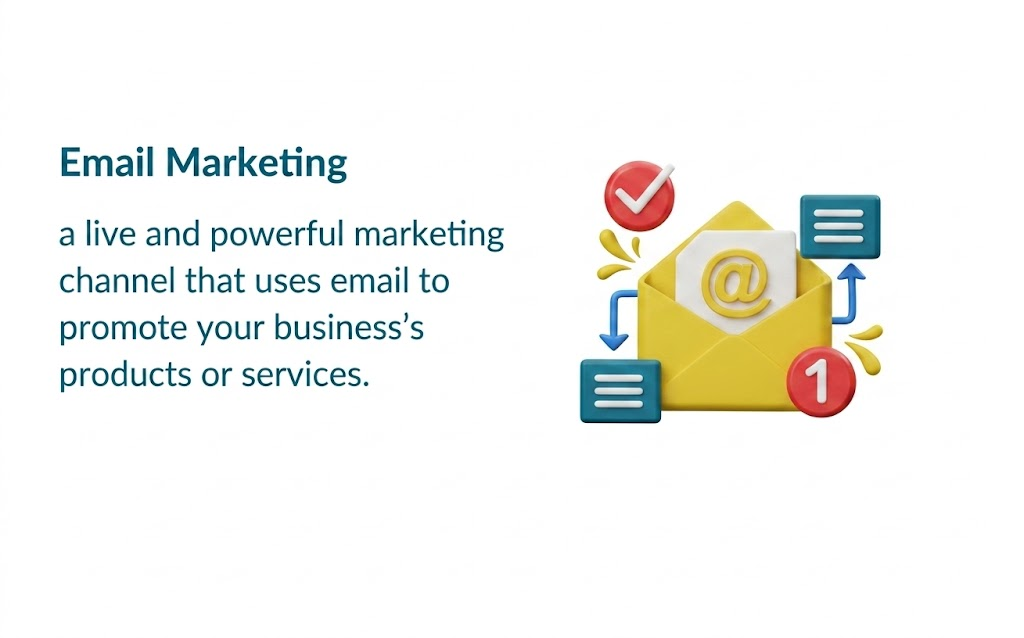
One of the most common questions asked by beginners and business owners is, “What is email marketing?” Email marketing is a digital marketing strategy that involves sending emails to a group of people to promote products, services, content, or customer relationships.
Businesses use email marketing to:
- Increase sales
- Build customer loyalty
- Share updates
- Promote offers
- Generate leads
- Drive website traffic
Unlike social media platforms where algorithms control visibility, email marketing provides direct access to your audience through their inbox.
Is Email Marketing Outdated?
One of the most common questions marketers ask is: “Is email marketing outdated?”
The simple answer is: No, email marketing is not outdated.
In fact, email marketing remains one of the highest-performing marketing channels because:
- People still use email daily
- Businesses rely on email for communication
- Email delivers a high return on investment (ROI)
- It allows personalized communication
- Customers prefer email for business updates and offers
How Does Email Marketing Work?
Email marketing works by sending targeted messages to subscribers who have agreed to receive emails from a business or website.
The process typically includes the following steps:
1. Build an Email List
Businesses collect email addresses through:
- Website signup forms
- Lead magnets
- Newsletters
- Free downloads
- Webinars
- Product purchases
2. Use an Email Marketing Platform
Tools like:
- Mailchimp
- ConvertKit
- Brevo
- HubSpot
3. Segment the Audience
Segmentation means dividing subscribers into groups based on:
- Interests
- Purchase behavior
- Location
- Engagement level
- Customer journey stage
This improves personalization and engagement.
4. Create Email Campaigns
Businesses send different types of emails, including:
- Promotional emails
- Welcome emails
- Newsletter campaigns
- Product launch emails
- Cart abandonment emails
- Educational emails
5. Analyze Performance
Marketers track metrics such as:
- Open rates
- Click-through rates
- Conversion rates
- Unsubscribe rates
- Bounce rates
These insights help improve future campaigns.
Fundamentals of Email Marketing
Understanding the fundamentals of email marketing is essential for long-term success.
1. Permission-Based Marketing
Always get user consent before sending emails. Buying email lists can damage your reputation and deliverability.
2. Audience Segmentation
Sending the same email to everyone reduces effectiveness. Personalized emails perform significantly better.
3. Consistent Branding
Your emails should maintain:
- Consistent tone
- Brand colors
- Professional design
- Clear messaging
4. Valuable Content
Subscribers stay engaged when emails provide value through:
- Helpful information
- Exclusive offers
- Educational content
- Industry insights
5. Strong Call-to-Action (CTA)
Every email should guide users toward a specific action such as:
- Buying a product
- Reading a blog
- Downloading a guide
- Booking a consultation
What Is an Email List?
An email list is a collection of email addresses gathered from people who voluntarily subscribe to receive communication from a business or brand.
Your email list is one of your most valuable digital marketing assets because:
- You own the audience
- You can communicate directly
- You are not dependent on social media algorithms
Define Goals for Email Marketing
Before starting an email campaign, define clear goals.
Common Email Marketing Goals
1. Increase Sales
Promote products and services to generate revenue.
2. Generate Leads
Collect subscriber information for future nurturing.
3. Build Relationships
Strengthen trust and engagement with customers.
4. Increase Website Traffic
Drive users to blog posts, landing pages, or product pages.
5. Improve Customer Retention
Keep existing customers engaged and loyal.
| Advantages of Email Marketing | Disadvantages of Email Marketing |
| Cost-effective marketing method | Emails may go to spam folders |
| Helps build strong customer relationships | Too many emails can annoy users |
| Easy to reach a large audience quickly | Requires quality content and strategy |
| Increases website traffic and sales | Open rates are not always guaranteed |
| Allows personalized communication | High competition in inboxes |
| Results can be tracked and analyzed easily | Unsubscribes may increase if emails are irrelevant |
| Improves brand awareness | Needs regular maintenance of email lists |
| Works well for promotions and updates | Poorly designed emails reduce engagement |
Understanding Deliverability Issues in Email Marketing
Deliverability is one of the most important aspects of email marketing success.Even great emails fail if they do not reach the inbox.
Common Deliverability Problems
1. Spam Trigger Words
Words like:
- “Free money”
- “Act now”
- “Guaranteed”
may trigger spam filters.
2. Poor Email Authentication
Proper setup of:
- SPF
- DKIM
- DMARC
helps verify email legitimacy.
3.Low Engagement
If subscribers ignore emails, inbox providers may reduce visibility.
4.Sending to Inactive Lists
Old or inactive email lists increase bounce rates and harm sender reputation.
Best Email Marketing Strategies
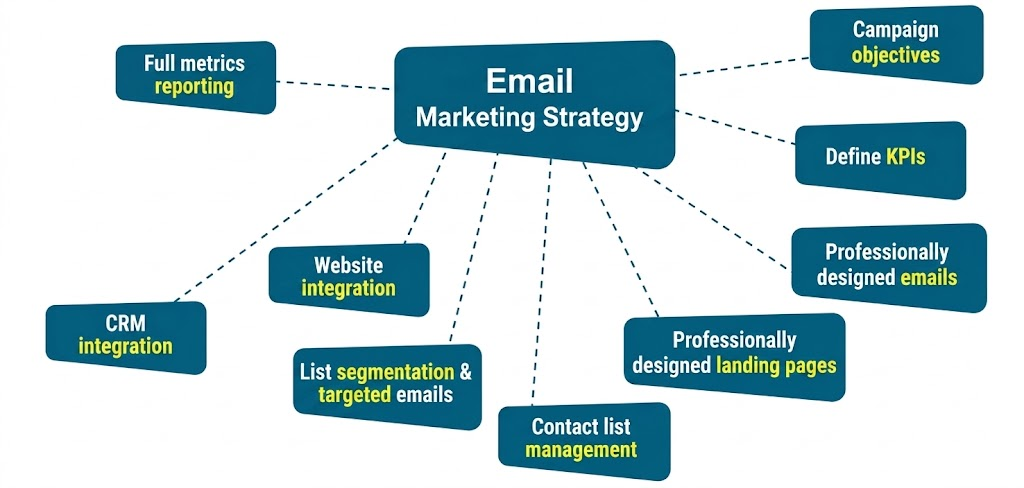
Successful email marketing requires more than simply sending emails.
1. Segment Your Audience
Segment subscribers based on:
- Interests
- Behavior
- Purchases
- Engagement
Segmentation improves relevance and conversions.
2. Personalize Emails
Use subscriber data to personalize:
- Subject lines
- Recommendations
- Offers
- Content
Personalization increases engagement.
3. Optimize Subject Lines
Subject lines determine whether users open emails.
Good subject lines are:
- Short
- Clear
- Curiosity-driven
- Benefit-focused
Example:
“5 Simple SEO Tips to Increase Website Traffic”
4. Use Mobile-Friendly Design
Most users check emails on smartphones.
Ensure:
- Responsive layouts
- Large fonts
- Easy-to-click buttons
- Fast loading images
5. A/B Test Campaigns
Test:
- Subject lines
- CTA buttons
- Email layouts
- Sending times
A/B testing helps identify what performs best.
6. Focus on Value First
Do not constantly sell.
Provide:
- Educational content
- Tips
- Industry updates
- Helpful resources
This builds trust.
7. Automate Email Sequences
Automation improves consistency and saves time.
Useful automations include:
- Welcome emails
- Lead nurturing
- Re-engagement campaigns
- Post-purchase follow-ups
How to Write Email Marketing Copy That Drives Results
Writing effective email copy is crucial for engaging your audience and achieving conversions.
1. Start with a Strong Subject Line
Your subject line should spark interest or emphasize a benefit.
Examples:
“How to Increase Sales Without More Traffic”
“The SEO Mistake Most Businesses Make”
“A Simple Marketing Strategy That Works”
2. Focus on the Reader
Avoid talking only about your business.
Instead, focus on:
- Customer problems
- Desired outcomes
- Benefits
Use words like:
- You
- Your
- Yours
more often than:
- We
- Our
- Us
3. Keep Emails Easy to Read
Use:
- Short paragraphs
- Bullet points
- Clear spacing
- Simple language
Avoid overly technical or complicated wording.
4. Use Conversational Language
Write like a real person.
Friendly and natural language improves engagement.
5. Include One Clear CTA
Do not overwhelm readers with multiple actions.
Examples:
- “Download the Guide”
- “Book a Free Demo”
- “Read the Full Article”
6. Create Urgency Carefully
Urgency can increase action when used naturally.
Examples:
- Limited-time offer
- Registration closes soon
- Only a few spots available
Avoid fake urgency because it damages trust.
7. Build Trust Through Authenticity
Honest communication improves long-term customer relationships.
Avoid:
- Clickbait
- Misleading claims
- Excessive hype
Common Email Marketing Mistakes to Avoid
- Buying email lists
- Ignoring mobile optimization
- Sending too many emails
- Weak subject lines
- Poor personalization
- No clear CTA
- Not testing campaigns
- Ignoring analytics
The Future of Email Marketing
Email marketing continues to evolve with:
- AI-driven personalization
- Advanced automation
- Interactive emails
- Predictive analytics
- Better segmentation
Businesses that prioritize relevance, personalization, and delivering value will continue to see strong results from their email marketing efforts.
Conclusion
Email marketing remains one of the most powerful and cost-effective digital marketing strategies available today.It provides direct access to customers, supports relationship building, and delivers measurable business growth.While challenges like deliverability issues and inbox competition exist, businesses can overcome them through strong strategies, quality content, and proper list management.
Understanding the basics of email marketing, building a quality email list, setting clear goals, and crafting persuasive email copy are all essential for achieving success. By focusing on personalization, segmentation, and value-driven communication, businesses can create email campaigns that drive engagement, conversions, and long-term customer loyalty.