Introduction
Choosing between Computer Science (CS) and Artificial Intelligence (AI) has become one of the most important decisions for students entering the technology field. As artificial intelligence transforms industries and digital technologies continue to expand, many students wonder whether Computer Science or Artificial Intelligence will offer better career opportunities by 2030.
The debate surrounding CS vs AI is becoming increasingly relevant because both fields promise strong career growth, high salaries, and global demand. However, each degree offers unique advantages, specialized knowledge, and different career pathways.
When evaluating CS vs AI, students must consider future job markets, technological advancements, salary potential, flexibility, and long-term career stability. By understanding the strengths and limitations of both degrees, students can make informed decisions that align with their career goals.
Understanding Computer Science
Before comparing CS vs AI, it is essential to understand what Computer Science offers.
Computer Science is a broad field focused on computing systems, software development, programming, algorithms, databases, operating systems, networking, cybersecurity, and software engineering.
Students studying Computer Science typically learn:
- Programming Languages
- Software Engineering
- Database Systems
- Computer Networks
- Operating Systems
- Cybersecurity
- Web Development
- Mobile App Development
- Cloud Computing
- Data Structures and Algorithms
Because of its broad curriculum, Computer Science provides graduates with flexibility across numerous technology careers.
Understanding Artificial Intelligence
When discussing CS vs AI, understanding Artificial Intelligence is equally important.
Artificial Intelligence focuses on creating systems capable of learning, reasoning, problem-solving, and making decisions. AI programs emphasize machine learning, deep learning, neural networks, robotics, computer vision, and natural language processing.
Students studying AI often learn:
- Machine Learning
- Deep Learning
- Neural Networks
- Data Science
- Computer Vision
- Natural Language Processing
- Robotics
- Predictive Analytics
- AI Ethics
- Intelligent Systems
Artificial Intelligence is considered a specialized branch that focuses on building intelligent technologies capable of performing human-like tasks.
CS vs AI: Curriculum Comparison
One of the biggest differences in CS vs AI lies within the curriculum.
Computer Science provides broader knowledge across multiple technology domains, while Artificial Intelligence focuses deeply on intelligent systems and data-driven technologies.
Computer Science Focuses On:
- Software Development
- System Design
- Networking
- Cybersecurity
- Database Management
- Cloud Computing
Artificial Intelligence Focuses On:
- Machine Learning
- Data Analysis
- AI Modeling
- Intelligent Automation
- Neural Networks
- Predictive Systems
Students comparing CS vs AI should understand that Computer Science offers wider technical exposure, while Artificial Intelligence provides deeper specialization.
CS vs AI: Job Opportunities
Career opportunities remain one of the most critical factors when evaluating CS vs AI.
Careers for Computer Science Graduates
Computer Science graduates may pursue careers such as:
- Software Engineer
- Full-Stack Developer
- Mobile App Developer
- Cybersecurity Analyst
- Cloud Engineer
- Database Administrator
- Systems Architect
- DevOps Engineer
The versatility of Computer Science gives graduates access to a wide variety of industries.
Careers for Artificial Intelligence Graduates
Artificial Intelligence graduates often pursue positions such as:
- AI Engineer
- Machine Learning Engineer
- Data Scientist
- Robotics Engineer
- AI Research Scientist
- NLP Specialist
- Computer Vision Engineer
- AI Consultant
The growing adoption of AI technologies creates strong demand for specialized professionals.
When considering CS vs AI, both degrees offer excellent employment opportunities, but AI careers tend to focus on advanced technologies and innovation.
CS vs AI: Salary Potential
Salary is another major factor in the CS vs AI comparison.
Computer Science graduates often secure competitive salaries due to demand for software development and technology expertise.Artificial Intelligence professionals frequently earn higher salaries because of specialized knowledge and industry demand.
Typical High-Paying CS Roles
- Software Architect
- Cloud Engineer
- Security Engineer
- Solutions Architect
Typical High-Paying AI Roles
- AI Engineer
- Machine Learning Engineer
- Data Scientist
- AI Research Specialist
Although salaries vary by location and experience, specialized AI roles often command premium compensation.
CS vs AI: Demand in the Future Job Market
Future demand significantly influences the CS vs AI debate.
Technology continues to evolve rapidly, creating opportunities for both Computer Science and Artificial Intelligence graduates.
Computer Science remains foundational because every technology company requires software systems, applications, infrastructure, and security solutions.
Artificial Intelligence demand is growing rapidly due to:
- Automation
- Healthcare Innovation
- Financial Technology
- Smart Manufacturing
- Autonomous Systems
- Data Analytics
The future job market strongly supports both fields, making CS vs AI one of the most balanced comparisons in higher education.
CS vs AI: Flexibility and Career Mobility
Flexibility is another important consideration when comparing CS vs AI.
Computer Science graduates often enjoy greater flexibility because their skills apply across numerous industries and technical disciplines.
A Computer Science graduate can transition into:
- Software Engineering
- Cybersecurity
- Cloud Computing
- Data Science
- Artificial Intelligence
Artificial Intelligence graduates may specialize earlier in their careers but often focus primarily on AI-related positions.
In terms of adaptability, Computer Science generally provides broader career mobility within the technology sector.
CS vs AI: Industry Applications
The practical applications of CS vs AI continue expanding worldwide.
Computer Science Applications
- Software Development
- Mobile Applications
- Enterprise Systems
- Cloud Platforms
- Network Infrastructure
- Cybersecurity Solutions
Artificial Intelligence Applications
- Self-Driving Vehicles
- Medical Diagnostics
- Chatbots
- Recommendation Systems
- Fraud Detection
- Smart Assistants
Both fields play crucial roles in technological innovation and business growth.
CS vs AI: Skills Required for Success
Success in CS vs AI requires strong technical and analytical abilities.
Important skills include:
Computer Science Skills
- Programming
- Algorithm Design
- Problem Solving
- Software Engineering
- System Architecture
Artificial Intelligence Skills
- Mathematics
- Statistics
- Data Analysis
- Machine Learning
- Model Optimization
Students should evaluate their interests and strengths when choosing between these two paths.
CS vs AI: Which Degree Is Better for Beginners?
Many students entering university wonder which option is easier.
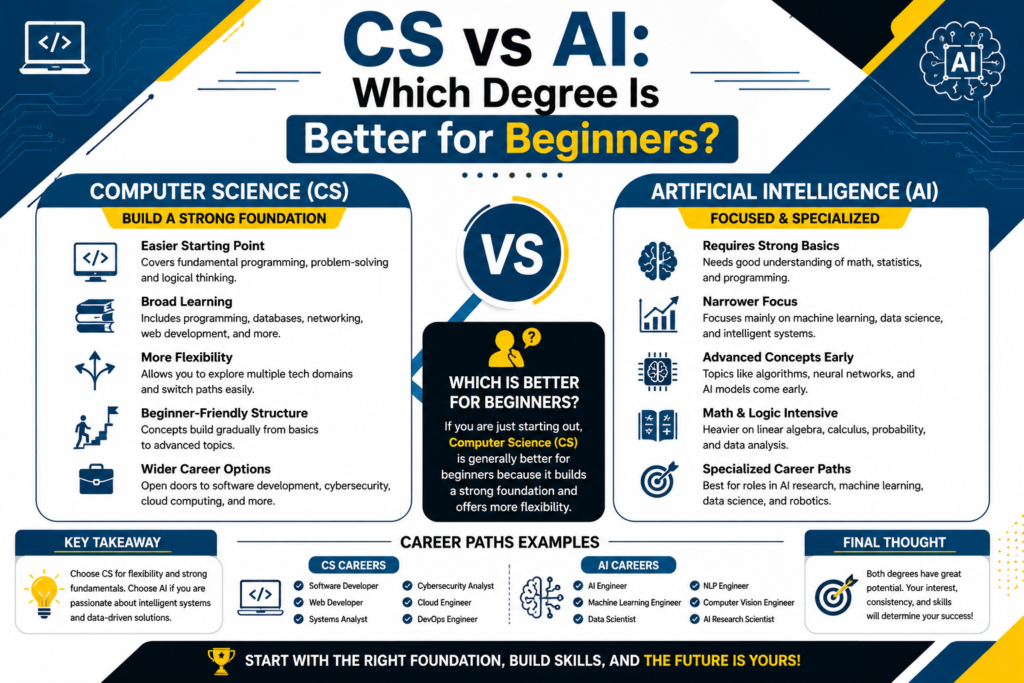
In the CS vs AI discussion, Computer Science is often considered a better starting point because it builds a comprehensive technical foundation.
Computer Science graduates can later specialize in:
- Artificial Intelligence
- Data Science
- Machine Learning
- Cybersecurity
- Cloud Computing
This flexibility makes Computer Science attractive for students who are still exploring their interests.
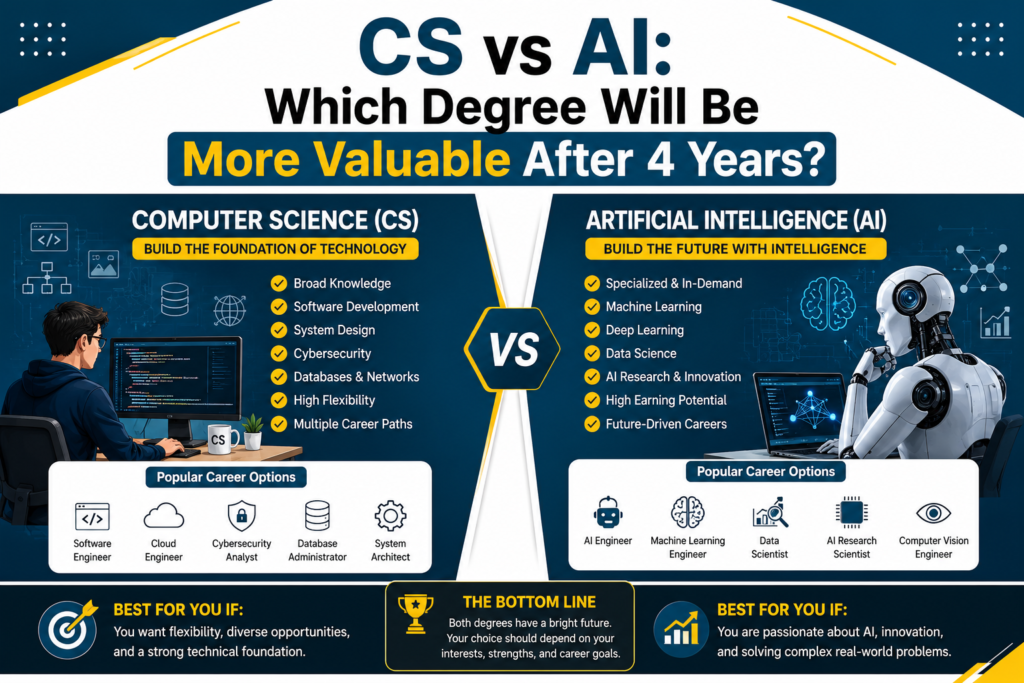
CS vs AI: Which Degree Will Be More Valuable in 2030?
The ultimate question in the CS vs AI debate is which degree will offer greater value by 2030.
The answer depends largely on individual goals.
If a student wants:
- Broad career options
- Greater flexibility
- Multiple specialization paths
- Long-term adaptability
Computer Science may provide greater overall value.
If a student wants:
- AI-focused careers
- Advanced machine learning expertise
- Data-driven innovation
- Specialized high-demand roles
Artificial Intelligence may offer stronger opportunities.
The technology industry will continue relying on both Computer Science and Artificial Intelligence professionals throughout the next decade.
Conclusion
The comparison of CS vs AI is not about determining a universal winner. Both degrees provide outstanding opportunities, strong salary potential, and excellent future demand.Computer Science offers versatility, adaptability, and a broad technical foundation.
Artificial Intelligence provides specialization, innovation-focused careers, and access to one of the fastest-growing sectors in technology.
For students seeking maximum flexibility, Computer Science remains an excellent choice. For those passionate about intelligent systems, automation, machine learning, and advanced technology, Artificial Intelligence may be the ideal path.
As we approach 2030, the most successful professionals will combine the strengths of both fields. Regardless of which degree students choose, continuous learning, practical experience, and adaptability will ultimately determine long-term success in the evolving digital economy.