Introduction
Artificial Intelligence, commonly referred to as AI, has become one of the most significant technologies in the modern world.
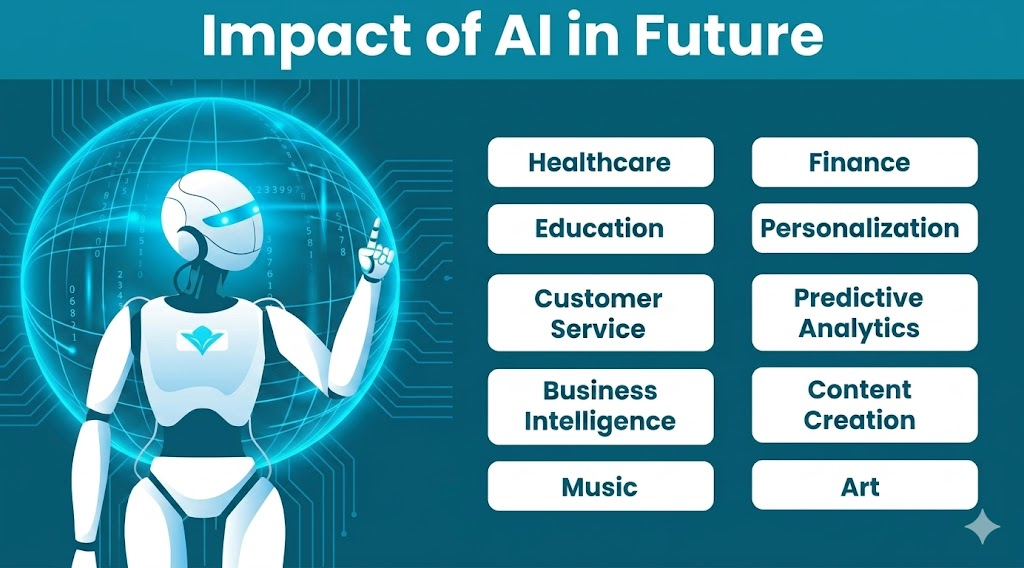
By 2026, AI is changing the world by reshaping industries, businesses, education, healthcare, and daily digital experiences. From smart assistants and automated systems to advanced data analysis and content generation tools, AI has become an integral part of everyday life.
What is Artificial Intelligence?
Artificial Intelligence is a technology that allows machines and computer systems to simulate human intelligence.
AI systems can analyze data, understand language, solve problems, recognize patterns, and even generate content.
In 2026, AI has advanced significantly due to improvements in:
– Machine learning
– Natural language processing
– Neural networks
– Data analysis
– Automation technologies
Modern AI systems can understand human language more naturally and provide more accurate results than earlier versions.
Where is AI being used?
In 2026, AI is becoming an essential part of both professional and personal life.
1) AI in Education
Schools, universities, and online learning platforms are using AI to offer smarter, more personalized learning experiences.
AI helps students by:
- Providing customized learning recommendations
- Offering AI tutoring assistance
- Translating educational content
- Generating summaries and notes
- Automating grading systems
Educational institutions also benefit through reduced administrative workload and improved management systems.
2) AI in Healthcare
AI is being used in healthcare for improved diagnosis, treatment planning, patient care, and medical research.
Hospitals and healthcare organizations employ AI for:
- Disease prediction
- Medical image analysis
- Patient monitoring
- Drug research and development
- Healthcare automation
3) AI in Business
Businesses are using AI to boost productivity, automate operations, and make better decisions.
AI systems help with:
- Customer support chatbots
- Workflow automation
- Inventory management
- Financial forecasting
- Data analysis
4) AI in Digital Marketing
AI is changing digital marketing by analyzing customer behavior, optimizing campaigns, and improving online visibility.
AI tools support:
- SEO optimization
- Keyword research
- Content creation
- Social media management
- Email marketing automation
- Audience targeting
5) AI in Entertainment and Media
Entertainment platforms use AI for personalized recommendations and enhanced user experience.
AI in this sector includes:
- Movie and music recommendations
- AI-generated media content
- Gaming improvements
- Streaming platform suggestions
Benefits of AI
AI offers many advantages for industries, businesses, and individuals.
- Increased productivity: AI systems perform repetitive tasks faster and continuously, boosting work efficiency.
- Faster decision-making: AI analyzes large data sets quickly, helping organizations make smarter decisions.
- Improved customer experience: AI provides personalized service and automation for better customer satisfaction.
- Better accuracy and reduced errors: AI minimizes human mistakes in data-intensive tasks.
- Automation of routine tasks: AI automates repetitive work, freeing up human effort for creativity and strategy.
- Better accessibility: AI improves access to information through translation tools and smart assistants.
- Improved research and development: AI accelerates research by processing large data quickly, supporting innovations in fields like medicine and science.
Negative Effects of AI
Despite its benefits, AI also presents challenges and concerns.
- Job replacement risks: AI can replace human labor in predictable, repetitive roles, such as data entry, customer support, and manufacturing.
- Data privacy concerns: AI systems collect and process user data, raising questions about privacy, misuse, and cybersecurity.
- Dependence on technology: Overreliance on AI may diminish human creativity, critical thinking, and independent problem-solving.
- AI-generated misinformation: AI can create false or misleading content, contributing to online misinformation and deepfake misuse.
AI and Jobs in 2026
Jobs involving predictable, repetitive tasks are more likely to be automated.
Examples include:
- Routine office work
- Data processing
- Basic customer support
- Manufacturing operations
This shift may reduce demand for traditional roles, but it also creates new opportunities.
New Opportunities Created by AI
AI is generating demand for new digital skills and careers.

Growing fields include:
- AI development
- Data science
- Machine learning
- Cybersecurity
- Prompt engineering
- Digital marketing
People with technical and digital skills are becoming increasingly valuable in the modern economy.
Human Skills Still Matter
Even with powerful AI, human creativity, emotional intelligence, and leadership remain essential.
Humans are still needed for:
- Leadership
- Innovation
- Strategic planning
- Ethical decisions
- Creative thinking
The future workplace will likely involve collaboration between humans and AI technologies.
Conclusion
By 2026, AI is transforming industries, businesses, healthcare systems, education, and digital experiences globally.
In the coming years, AI is expected to become even more advanced and deeply integrated into everyday life. Those who adapt to AI technologies and develop digital skills are likely to benefit most from future opportunities. Human creativity, ethical thinking, leadership, and innovation will provide a more efficient and accessible system.